
Polyvagal Theory
The Nervous System, Body-based Healing, and Trauma
Trauma and Anxiety Spectrum
General overview
Polyvagal Theory all boils down to safety and danger. When we sense danger our nervous system switches to fight or flight. We become “on-edge” and prepare for attack. This state is tiring and can only be sustained for so long. When the body stays here too long or is pushed even further, we enter the freeze response as everything starts to shut down. However, when we perceive safety we activate a part of our nervous system reserved for enjoying life with friends and family. This is called our Social Engagement System, and this is what trauma and PTSD will rob a life of if left untreated. This is especially true for those struggling with complex trauma and CPTSD who have grown up becoming accustom to nervous system disregulation.
We often think of pushing ourselves to make progress, but what Polyvagal Theory teaches us, is that we make progress by staying in our window of tolerance. To pair safety with previously triggering experiences, and to maintain a feeling of safety is to heal, which can often be counterintuitive.
Below is an image of the Yerkes-Dodson Law, which shows how we move through different nervous system states naturally. Not all stress is bad, it is when it is chronic and overwhelming over and over that we can experience problems like trauma and dissociation, which is essentially a fast track into the far right side of the image below.

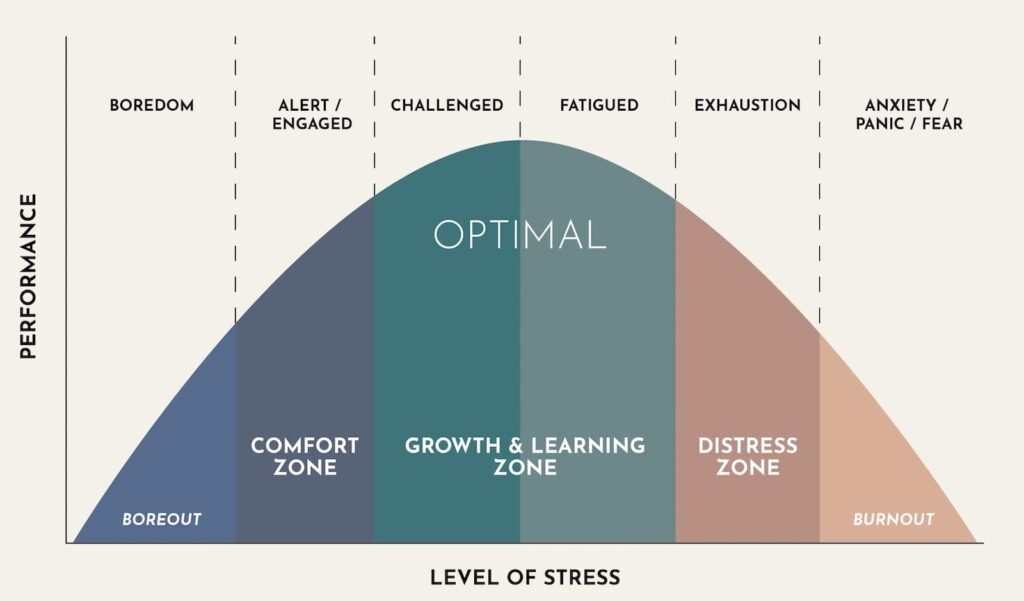
The States of the Nervous System
Fight, Flight, And Freeze
Polyvagal Theory teaches us that there are three different parts to the nervous system, not just the Sympathetic and Parasympathetic we learned about in school. The three systems are detailed here:
Ventral Vagal System (Social Engagement): In situations perceived as safe, the ventral vagal system promotes social engagement, connection, and feelings of well-being.
Sympathetic Nervous System (Fight or Flight): When faced with a threat, the sympathetic nervous system activates, preparing the body for fight or flight by increasing heart rate, mobilizing energy, and heightening awareness.
Dorsal Vagal System (Freeze): If a situation is perceived as overwhelming or inescapable, the dorsal vagal system may activate, leading to a “freeze” response characterized by shutdown, dissociation, or disconnection.
How This Informs My Work in Therapy
In my work as a trauma therapist in Chiang Mai, I integrate current scientific understandings of the nervous system into how therapy is paced and structured. Emotional reactions, anxiety, shutdown, or dissociation are not treated as problems to be eliminated. They are understood as signals of a nervous system that has learned to protect you.
Many people experiencing CPTSD, trauma-related depression, or chronic anxiety believe something is fundamentally wrong with them. In reality, these symptoms are often evidence that the nervous system is doing exactly what it learned to do in response to earlier conditions. The task of therapy is not to override these responses, but to gradually help the nervous system update, so it can respond to the present rather than remain organized around the past.
Rather than pushing insight or emotional exposure faster than the system can tolerate, therapy is paced to support regulation and stability, the language the nervous system understands. This may include grounding practices, attention to bodily responses, and body-based or somatic approaches that help restore a sense of safety and orientation. Working this way allows deeper therapeutic work to occur without overwhelm, collapse, or retraumatization.
In sessions, we may focus on noticing how your body responds, not only what you think. We track when the nervous system shifts into fight, flight, or shutdown, and learn how to restore a sense of grounded presence before engaging difficult material. Over time, this builds the capacity to remain emotionally engaged without becoming flooded or numb. As regulation improves, many clients notice that thoughts become clearer, emotions more accessible, and relationships less reactive, often without the need for extensive analysis of the past.
Who This Approach Is For
This approach is particularly helpful for people who understand their difficulties intellectually but still feel stuck; who experience anxiety, emotional overwhelm, or chronic tension; who feel emotionally numb, detached, or shut down; or who have a history of complex trauma, developmental stress, or relational injury.
It is also well suited for individuals who find that traditional talk therapy alone has felt limited or ineffective, especially when working with CPTSD, trauma-related depression, or nervous system-based symptoms that do not respond to insight alone.
How This Integrates With Other Therapeutic Approaches
Polyvagal and nervous-system awareness is not a standalone technique. It provides a foundation that supports and strengthens other therapeutic modalities, including EMDR, somatic therapies, parts-based work (IFS), Cognitive Behavioral Therapy (CBT), and narrative approaches.
When the nervous system is sufficiently regulated, trauma processing becomes safer and more effective. Cognitive work tends to land more deeply, emotional insight leads to real change rather than repetition, and therapy can move forward without relying on force or urgency.

We would love to work with you!

Address
Chiang Mai, Thailand
Nimman and Central Festival


Information
+66 096.426.1877
closingthewound@gmail.com

Office Hour
Monday – Friday:
9:00 – 19:00
Sunday – Saturday:
10:30 – 19:00